Best Budget Lenses for Portraits, Street, Travel, and Product Work
The best budget lens is the one that solves a specific shooting problem without forcing you to replace your whole kit. For most photographers, a fast 50mm or 35mm prime, a compact standard zoom, and a basic macro or close-focus option cover more real work than an expensive lens bought too early.
Lens-buying shorthand: Match focal length to subject, aperture to light and background blur, stabilization to slow shutter needs, and mount compatibility to your camera body. Used gear can be smart, but only when condition and return policy are clear.
Learn the lens language before shopping
A lens name can look like a code: focal length, maximum aperture, mount, stabilization, focusing motor, and sometimes pro-series labels. Canon's guide to reading Canon lens names is useful even if you do not shoot Canon because it shows how much information is hidden in those letters and numbers. Nikon's explanation of focal length is also helpful because field of view drives nearly every lens choice.
Budget buying becomes safer once you understand three questions: Does it fit my camera mount? Does the focal length suit my subject? Does the aperture support the light and depth of field I want?
Budget lens categories by job
| Shooting need | Good budget direction | Why it helps | Common compromise |
|---|---|---|---|
| Portraits | 50mm f/1.8, 85mm f/1.8, or system equivalent | Flattering perspective and background separation | Tight indoors on crop sensors or small rooms |
| Street | 28mm, 35mm, compact 40mm, or small kit zoom | Context, portability, quick framing | Wider lenses require careful composition |
| Travel | Lightweight standard zoom or one small prime | Less weight and fewer lens changes | Lower light performance than fast primes |
| Product work | Macro lens, close-focus prime, or extension-tube setup | Detail, sharpness, controlled framing | Lighting and tripod matter as much as lens |
Portrait lenses: think distance and comfort
Portraits are not only about blur. They are about working distance, face shape, background control, and how comfortable the subject feels. B&H's guide to choosing a portrait lens explains how focal length changes framing and look. A 50mm lens on many cameras is affordable and flexible, while an 85mm-style lens often gives more flattering compression for headshots and half-body portraits.
If you shoot in small rooms, do not assume longer is better. You may not have enough space to step back. If you shoot outdoors, a longer budget prime can give you separation without needing the most expensive glass.
Street lenses: smaller often wins
Street photography rewards readiness. A compact 35mm or 28mm equivalent lens can be more useful than a large, impressive lens that makes you hesitate. Wider lenses include environment, gestures, signs, weather, and movement. They also force you to compose actively rather than isolating everything with blur.
For beginners, a small kit zoom is not a failure. It helps you learn which focal lengths you actually use. Check your photo metadata after a month. If most of your favorite frames cluster around 35mm or 50mm equivalent, you have evidence for your first prime.
Travel lenses: weight is a creative feature
Travel photography punishes overpacking. A lens that stays in the hotel room is not a bargain. A lightweight standard zoom is often the most practical budget choice because it covers food, streets, interiors, landscapes, and portraits without constant swaps. Add a small fast prime only if you often shoot at night or indoors.
Before a trip, test your lens bag on a long walk. If the setup annoys you at home, it will feel worse after hours of transit, heat, crowds, or rain. Think like a practical planner, the same way performance fans compare seat-selection trade-offs before buying tickets.
Product work: sharpness is only part of the image
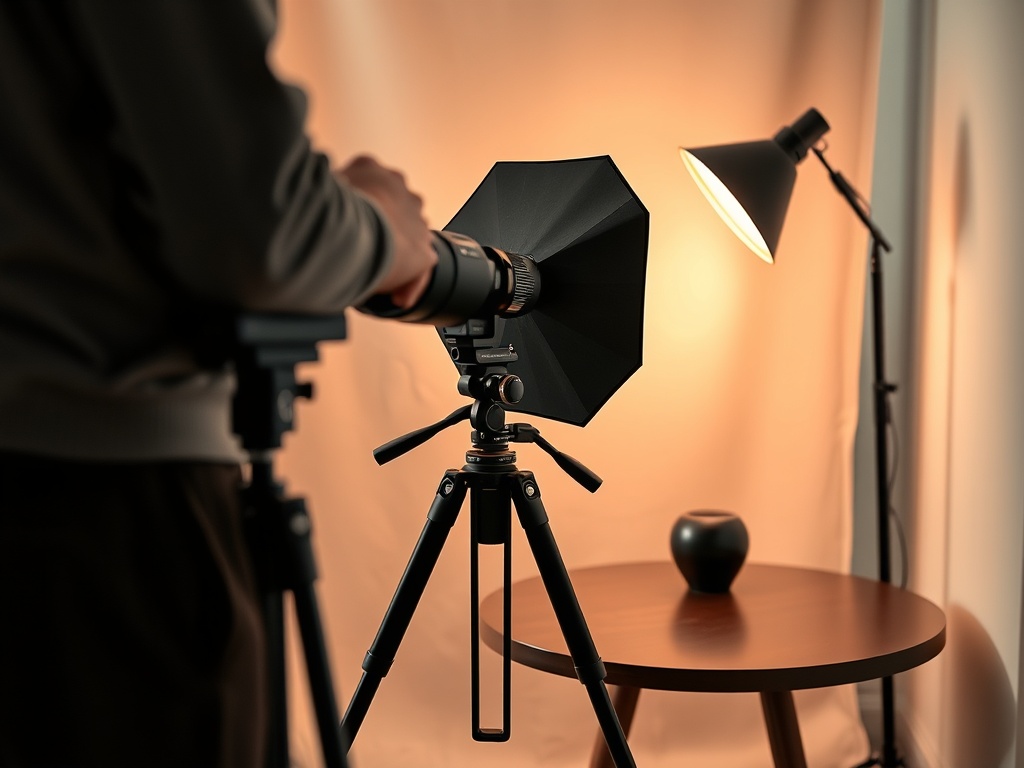
For product photography, a budget lens can work very well if you control lighting, background, tripod stability, and focus. A macro lens is ideal for small products, jewelry, craft, or texture. For larger items, a normal prime or short telephoto can be enough. Avoid very wide lenses for products unless distortion is part of the creative concept.
Product images also reveal dust, reflections, and uneven color. Spend some of the lens budget on lights, diffusion, clamps, background paper, cleaning cloths, and a tripod. The cheapest lens upgrade is often better setup discipline.
Used lenses can stretch the budget
Used lenses are often the best value, especially for older DSLR systems and mature mirrorless mounts. Check autofocus, aperture blades, fungus, haze, scratches, stabilization noise, and mount wear. Buy from a seller with a return window if possible. Cosmetic scuffs are usually less important than optical and mechanical condition.
Be careful with adapters. They can be excellent, but autofocus speed, stabilization, metadata, and aperture control may vary. A cheap lens plus an unreliable adapter can cost more in frustration than a native budget option.
Build a small kit, not a shelf
A smart starter kit might be one kit zoom, one fast prime, and one close-focus or macro option. That covers daily use, portraits, low light, and detail work. If you also draw, design, or create mixed-media projects, pair your camera choices with practical creative hardware such as drawing tablets for artists. If your work connects to music or performance coverage, tracking new artist releases can help you plan shoots around announcements, gigs, and visual campaigns.
The purchase test that saves money
Before buying, write the exact sentence: "I need this lens because my current lens cannot…" If you cannot finish the sentence clearly, wait. If you can name the problem, such as low-light portraits, wider street scenes, lighter travel, or sharper small-product detail, then compare only lenses that solve that problem. Budget photography improves fastest when each purchase has a job.
Crop factor also changes buying logic. A 50mm lens on a crop-sensor body can behave more like a short portrait lens than a normal everyday lens. A 24mm or 35mm option may be more useful indoors. Always compare equivalent field of view, not just the number printed on the lens barrel.