Teen Oral Hygiene With Braces: What Parents Should Watch
Teen Oral Hygiene With Braces: What Parents Should Watch
Braces can make oral hygiene harder, not optional. Parents do not need to hover over every brushing session, but they do need to watch for the small signs that routine cleaning is slipping before stains, swollen gums, or broken appliances turn into bigger problems.
TL;DR: The best braces routine is the one a teen can repeat every day. Parents should watch for plaque around brackets, gum swelling, food trapping, bad breath, and repeated broken wires or rubber bands.
Why braces change the hygiene game
Brackets, wires, and elastics create extra ledges where plaque sticks. Food collects more easily, and a normal quick brush may leave the gumline and spaces around brackets dirty. The ADA and NIDCR both stress the basics of daily plaque control, and those basics become even more important during orthodontic treatment. ADA MouthHealthy on braces NIDCR oral hygiene guidance
Parents should think less in terms of “Is my child brushing?” and more in terms of “Are they cleaning effectively around hardware?”
What parents should actually monitor
1. White buildup or fuzzy edges around brackets
This usually means plaque is sitting in place too long. If it keeps happening, teens can develop permanent white-spot lesions even if no cavity forms yet.
2. Puffy or bleeding gums
Some bleeding with better flossing can happen at first, but ongoing puffiness suggests the gumline is not being cleaned well enough.
3. Bad breath that does not improve after brushing
This often points to plaque retention or food debris trapped around orthodontic hardware.
4. Frequent broken brackets or bent wires
Not every break is a hygiene issue, but repeated breakage may mean the teen is struggling with food choices or day-to-day care.
5. Short, rushed brushing
A teen who “brushes” for a few seconds in the morning is usually not getting around brackets and under the wire.
A routine that usually works better than reminders alone
A good braces routine should be specific, visible, and repeatable.
- Brush twice a day with fluoride toothpaste.
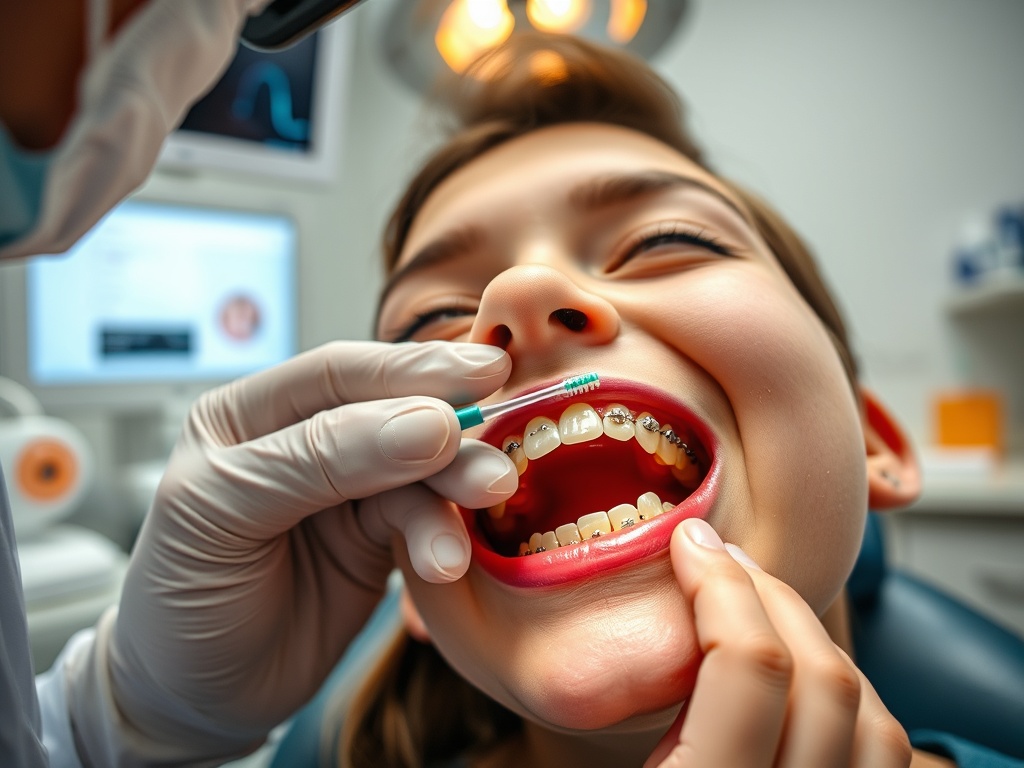
- Angle the brush above and below each bracket.
- Clean between teeth once daily.
- Use an orthodontic brush, proxy brush, or water flosser if it helps consistency.
- Check the mirror for plaque near the gumline before stopping.
Many teens do better when parents ask for a quick visual check rather than a lecture. “Show me the top gumline around the front brackets” is more useful than “Did you brush?”
If your family is also thinking about cavity prevention, Dental Sealants for Adults and Teens: Are They Worth It? shows when extra protection may make sense for back teeth during the braces years.
Helpful tools and where they fit
The ADA notes that water flossers can be especially helpful for people with braces. ADA guidance on water flossers
Food habits parents often underestimate
Sticky candy is the obvious problem, but crunchy snacking all day matters too. Frequent chips, crackers, sweetened drinks, and sports drinks can increase cavity risk and leave sticky residue around brackets. The issue is not only “forbidden foods.” It is how often the teeth are exposed and how well they are cleaned afterward.
Planning Notes for Teen Oral Hygiene Braces
Parents should contact the orthodontic or dental office sooner when they notice:
- gums that bleed every day despite a better routine
- white spots near brackets
- new sensitivity or tooth pain
For evidence-based background, this section aligns with ADA braces guidance and NIDCR oral hygiene guidance, both of which are useful for checking definitions, preventive advice, and red-flag guidance.
- broken wires poking the cheek
- swollen tissue growing around brackets
- repeated missed appointments or poor elastic wear
Some situations can wait for a routine visit. Others should not. For sharp wires, significant pain, or swelling, it helps to know how to access after-hours dental care if the regular office is closed.
How parents can help without making it a fight
The most effective support is usually practical, not dramatic:
- keep hygiene tools stocked in one spot
- make travel-size supplies easy to grab
- ask for one specific visual check
- tie the routine to fixed times, like after breakfast and before bed
- let the orthodontist reinforce expectations at visits
Parents often assume teens need more motivation. Many actually need less friction.
How often should a teen still see the general dentist?
Orthodontic visits do not replace routine preventive dental visits unless the treating team tells you otherwise. Braces move teeth. They do not clean them. A general dentist may still check for cavities, gum inflammation, and preventive needs that the orthodontic schedule is not designed to manage.
Questions About Teen Oral Hygiene Braces
For Teen Oral Hygiene Braces, this part of Questions About Teen Oral Hygiene Braces focuses on the symptom history, previous treatment, current medicines, and the result the patient values most when the diagnosis is confirmed, with the same details verified as the long-term result is reviewed. The clinician should also explain which examination finding supports each recommendation and what information could change it for Teen Oral Hygiene Braces before the final recommendation is accepted, using the examination and health history rather than a general assumption.
Clinical Checks for Teen Oral Hygiene Braces
When evaluating Teen Oral Hygiene With Braces: What Parents Should Watch, the dentist should explain how medical history, previous treatment, bite forces, and tissue health affect the recommendation. Before accepting a plan for Teen Oral Hygiene With Braces: What Parents Should Watch, request a plain-language explanation of what would make the diagnosis or treatment sequence change before consent is finalized.
Timing and Recovery for Teen Oral Hygiene Braces
Before scheduling Teen Oral Hygiene With Braces: What Parents Should Watch, ask how delays, missed visits, or slower healing could change comfort, cost, and the final result when the diagnosis is confirmed. The timeline for Teen Oral Hygiene With Braces: What Parents Should Watch should include diagnosis, preparation, treatment, healing, adjustment, and maintenance rather than only the main appointment.
The routine that protects teeth during braces
Teen oral hygiene with braces works best when parents watch the right things: plaque near brackets, gum health, food traps, breakage patterns, and whether the routine is realistic enough to repeat every day. Fancy tools can help, but a simple routine done well beats a perfect routine done rarely.
A good next step is to do one mirror-based hygiene check this week and ask the orthodontic or dental team which cleaning aid is most realistic for your teen’s actual habits.
Comparing Options for Teen Oral Hygiene Braces
For Teen Oral Hygiene Braces, this part of Comparing Options for Teen Oral Hygiene Braces focuses on benefit, limitations, durability, maintenance, timing, and total cost as the long-term result is reviewed, with the same details verified as the long-term result is reviewed. The clinician should also explain how each choice preserves tooth structure or tissue and what backup treatment may be needed for Teen Oral Hygiene Braces before temporary care is replaced, using the examination and health history rather than a general assumption. Recording that explanation gives the patient a clearer next step for Teen Oral Hygiene Braces as the long-term result is reviewed, especially when follow-up duties are reviewed as the long-term result is reviewed.