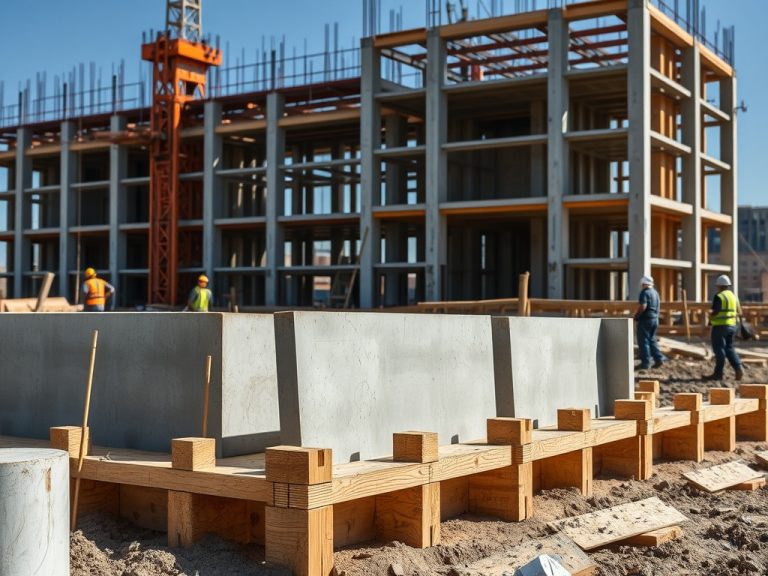
What building commissioning means for new facilities
Building commissioning is a quality-assurance process that verifies a new facility's systems are planned, installed, tested, documented, and ready to support the owner's operational needs. It is not just final inspection; it should begin early enough to catch gaps before they become occupant complaints or maintenance problems.
Owner readiness note: Commissioning connects design intent, installation quality, equipment testing, operator training, and closeout documentation so the building team can operate the facility with fewer unknowns after turnover.
Commissioning in plain language
For owners, building commissioning answers a practical question: does the finished facility actually work the way the project required? That includes more than the visible finishes. Heating, ventilation, controls, electrical distribution, lighting, plumbing, life-safety interfaces, envelope elements, and other systems may need verification depending on the project scope.
The U.S. Department of Energy describes commissioning as a quality-assurance process used to verify that a building performs according to original design intent and meets owner and occupant needs. The DOE's overview of commissioning in federal buildings is written for federal facilities, but the core concept is useful for private owners as well: performance should be checked against defined requirements, not assumed at handover.
What gets verified during new-facility commissioning
Commissioning does not replace design, construction management, code inspection, or contractor quality control. It adds a systematic verification layer. The commissioning provider typically reviews owner requirements, design documents, submittals, installation checks, functional test procedures, deficiency logs, training records, and operations documents.
The exact scope depends on the building type. A simple office renovation may focus on HVAC controls and lighting. A healthcare, laboratory, data center, cold-storage, or manufacturing facility may need deeper integrated systems testing because system failure can have more serious operational consequences.
Teams considering commissioning should also understand how it differs from startup. Startup confirms that a piece of equipment can run. Functional testing checks whether equipment and controls perform under defined operating modes. Integrated testing looks at how systems interact. Those distinctions help owners avoid signing off on equipment that runs but does not support the intended facility sequence.
The documents owners should recognize
| Commissioning document | Why it matters | Owner question to ask |
|---|---|---|
| Owner's Project Requirements | Defines the facility goals and performance expectations | Does this reflect how the building will actually be used? |
| Basis of Design | Explains how the design intends to meet the owner's requirements | Are assumptions clear enough for future maintenance teams? |
| Commissioning Plan | Identifies scope, roles, schedule, and test strategy | Who owns each verification activity and when will it happen? |
| Issues Log | Tracks deficiencies and resolutions | Which open items affect occupancy, warranty, or training? |
| Systems Manual | Collects operating information for the facility team | Can operators use this after the project team leaves? |

The Whole Building Design Guide's building commissioning process describes commissioning as a team-based process that includes phases and activities for new and existing buildings. That team-based aspect is crucial. Commissioning is strongest when the owner, design team, contractors, controls vendor, facility staff, and commissioning provider share information early.
When commissioning begins and why timing matters
Owners sometimes bring commissioning in after most construction is complete. That can still help, but it limits the value. Early involvement allows the commissioning provider to review the Owner's Project Requirements, flag testability concerns, and help align documentation before equipment is purchased or installed.
Early commissioning also supports field training. If the facility will hire new operators or maintenance technicians, commissioning documentation can become a training tool. The same workforce logic behind training new technicians and apprentices for long-term retention applies here: people perform better when the expected process is visible, documented, and practiced before they are under pressure.
Bring operators in before the training day
Commissioning is more useful when future operators are involved before formal training. Facility staff can review access routes, alarm descriptions, valve locations, filter changes, trend views, and shutdown steps while contractors are still available to explain choices. Their questions often reveal practical issues that drawings do not show, such as a panel door blocked by stored equipment or a controller label that makes sense to the installer but not to the maintenance team.
Owners should also decide how seasonal testing will be handled. Some systems cannot be fully tested under every load condition before occupancy. In those cases, the commissioning plan should identify deferred tests, responsible parties, target conditions, and documentation requirements so the issue does not disappear after substantial completion.
Mistakes that turn commissioning into paperwork
The most common mistake is treating commissioning as a late-stage checklist. A checkbox without field verification does not prove that systems work together. Another mistake is leaving the facilities team out of functional testing. Operators who inherit the building need to see sequences, alarms, overrides, setpoints, and access requirements firsthand.
Owners should also avoid unclear authority. If the commissioning provider identifies an issue, the contract should define how it is assigned, tracked, corrected, and accepted. Without that structure, the issues log can become a list that everyone reads but no one owns.
A third mistake is failing to connect commissioning with warranty management. If a deficiency appears after occupancy, good commissioning records help distinguish between design assumptions, installation defects, controls programming, operator error, and normal adjustment. This does not guarantee a warranty outcome, but it gives the owner better evidence.
Commissioning checklist for owners and project managers
- Confirm which systems are included in commissioning before bids are finalized.
- Put commissioning requirements in the project documents rather than relying on informal cooperation.
- Review the Owner's Project Requirements with operations staff, not only executives.
- Require functional test procedures before testing begins.
- Attend representative tests for critical systems.
- Keep an issues log that shows status, responsibility, and resolution evidence.
- Require training records and usable operations documentation before final closeout.
The GSA Commissioning Guide provides a deeper framework for federal projects and is useful reading for owners who want to see how commissioning roles can be organized from planning through occupancy.
What owners should confirm before occupancy
Before accepting a new facility, owners should know which systems were tested, which deficiencies remain open, which training sessions were completed, and which documents the maintenance team will use on day one. Commissioning is valuable because it turns turnover from a pile of manuals into a verified operating handoff.
This article is for general educational purposes and does not replace engineering, commissioning-provider, code, legal, or project-management advice. Commissioning scope should be tailored to the facility, jurisdiction, contract documents, and operational risk.
A useful next step is to review one active project and ask whether the Owner's Project Requirements, commissioning plan, issues log, and training plan are already in place.